February 22 2021
Olive Oil and Type 2 Diabetes: What Does Scientific Research Say?
Extra virgin olive oil plays an important role in the Mediterranean diet, which is widely recognized for its many health benefits. Rich in monounsaturated fatty acids and antioxidant compounds, it has attracted researchers' interest, particularly for its potential role in metabolic health.
But what is the actual connection between olive oil and type 2 diabetes? Can it help improve blood sugar regulation?
Research suggests that olive oil can be part of a balanced diet, particularly as part of the Mediterranean diet studied in the PREDIMED trial. However, scientific evidence does not show that olive oil alone can prevent or treat diabetes.
In this article, we explore current scientific findings, the properties of extra virgin olive oil, and its place in a diet that supports metabolic health.
Extra Virgin Olive Oil: A Source of Healthy Fats and Antioxidant Compounds
Extra virgin olive oil is particularly valued for its nutritional composition. It is rich in monounsaturated fatty acids, especially oleic acid, a type of fat that contributes to the nutritional quality of the Mediterranean diet.
Replacing some saturated fats with unsaturated fats is a beneficial approach to maintaining a balanced diet and supporting cardiovascular health.
However, the benefits of extra virgin olive oil go beyond its fatty acid content. It also contains naturally occurring bioactive compounds found in olives, including polyphenols, which are known for their antioxidant properties.
These compounds are being studied for their potential role in protecting cells against oxidative stress and in processes related to inflammation. A systematic review published in 2025 and appearing in 2026 examined 23 clinical trials investigating the effects of daily extra virgin olive oil consumption on various markers of inflammation and oxidative stress. The findings suggest potential benefits, although further research is needed to confirm their significance.
More recently, a scientific review published in 2026 also examined the phenolic compounds found in extra virgin olive oil and their potential mechanisms of action in relation to cardiovascular health.
These properties make extra virgin olive oil an interesting addition to a balanced diet. However, it is important not to confuse the studied properties of its compounds with a proven therapeutic effect on diabetes.
To learn how to identify a quality olive oil, discover our guide on how to read the label of a premium olive oil bottle.
Olive Oil and Blood Sugar: What Do Scientific Studies Show?
One of the most widely discussed topics is the effect of olive oil on blood sugar levels, also known as blood glucose. Some of its components, particularly monounsaturated fatty acids and polyphenols, are being studied for their potential interactions with glucose metabolism and insulin sensitivity.
However, research findings should be interpreted with caution.
What Does Scientific Research Reveal?
In 2026, researchers analyzed the results of 51 studies involving more than 4,300 participants to better understand the effects of olive oil on blood sugar levels. The researchers examined different types of olive oil and their effects on several indicators related to blood sugar control.
Overall, olive oil consumption did not lead to statistically significant improvements in blood glucose, insulin levels, glycated hemoglobin (HbA1c), or the HOMA-IR index, a marker used to assess insulin resistance.
Additional analyses did identify some associations between the amounts consumed, the duration of the interventions, and indicators of insulin resistance. These findings deserve further investigation, but they are not sufficient to establish a recommended intake or demonstrate a therapeutic benefit.
The results therefore show that consuming olive oil does not necessarily lead to lower blood sugar levels or improvements in other diabetes-related indicators.
What Role Can It Play in Your Diet?
Extra virgin olive oil can still be part of a balanced diet, particularly when it replaces fats that are high in saturated fatty acids.
Its benefits should be considered within the broader context of dietary habits, including food quality, a variety of nutrient sources, balanced meals, and physical activity.
For people living with type 2 diabetes, olive oil can be an interesting source of fat as part of a diet adapted to their needs, without replacing prescribed treatments or medical follow-up.
To learn more about other researched benefits of olive oil, discover our article on the positive effects of olive oil on weight management.

The Mediterranean Diet and the Prevention of Type 2 Diabetes
The Mediterranean diet is often associated with better cardiovascular health and balanced eating habits. It emphasizes fruits, vegetables, legumes, whole grains, nuts, fish, and olive oil as its main source of dietary fat.
Several studies have investigated its role in preventing type 2 diabetes. Among them, the PREDIMED study, published in the New England Journal of Medicine, followed people at high cardiovascular risk who did not have diabetes at the beginning of the study.
Participants followed different dietary patterns: a Mediterranean diet supplemented with extra virgin olive oil, another supplemented with nuts, or a low-fat diet.
The results showed that people following a Mediterranean diet were less likely to develop type 2 diabetes than those in the low-fat diet group.
These findings are encouraging, but they should be interpreted with care: the study examined the Mediterranean diet as a whole. It therefore does not establish that olive oil alone was responsible for these benefits.
Extra virgin olive oil remains an important ingredient in this dietary pattern. Used to dress salads, accompany vegetables, or enhance everyday dishes, it is an easy way to prioritize unsaturated fats in your daily meals.
Looking to bring more Mediterranean flavours to your table? Explore our Favuzzi recipes, including our fettuccine with yellow tomato sauce, basil, zucchini ribbons, and lemon.
Polyphenols: What Makes Extra Virgin Olive Oil So Special?
Polyphenols are naturally occurring compounds found in extra virgin olive oil. Known for their antioxidant properties, they also contribute to its distinctive flavour and character.
They are associated with some of the bitterness and peppery notes found in oils made from early-harvest olives. These characteristics are particularly appreciated by those who enjoy bold, flavourful olive oils.
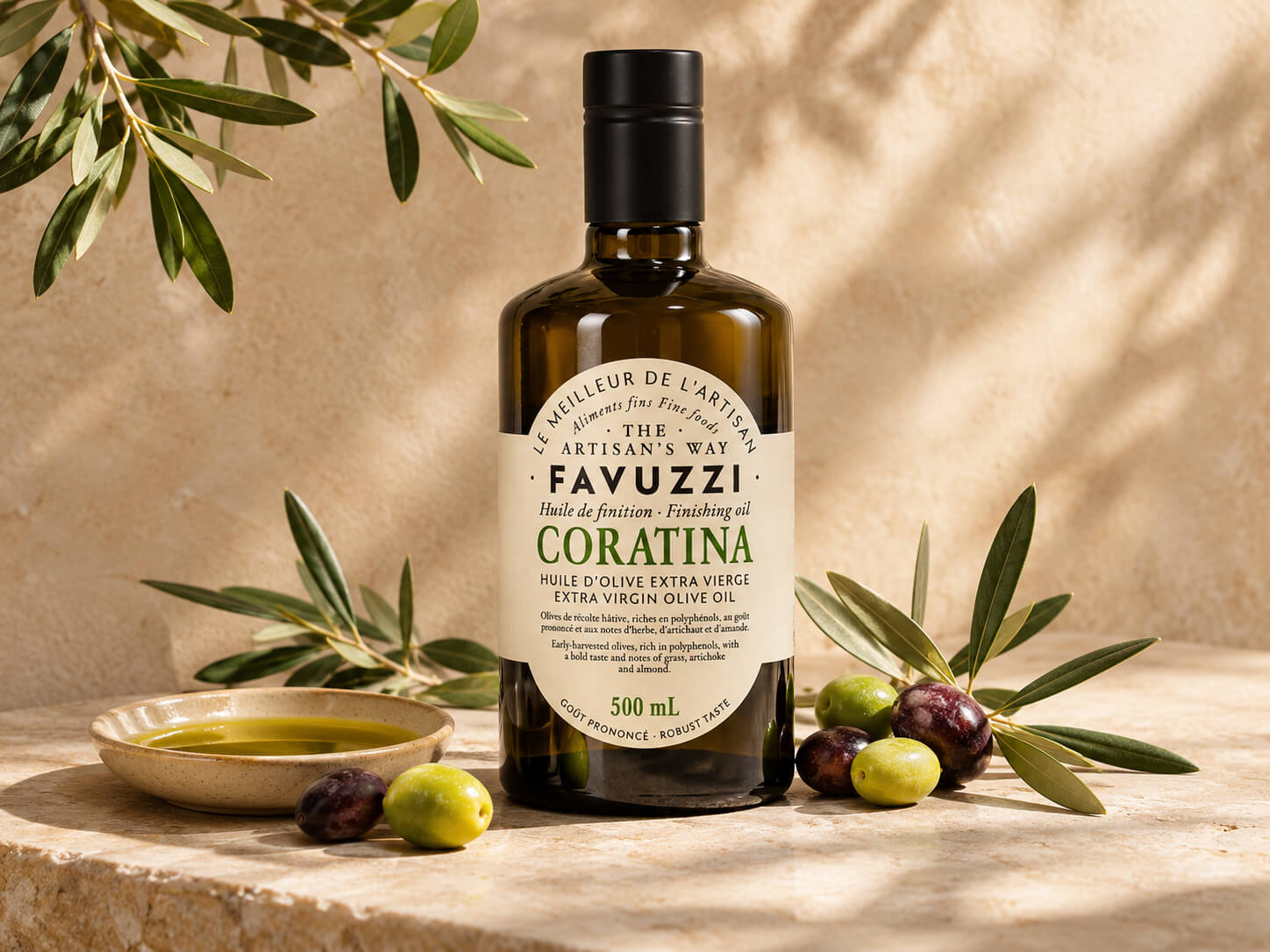
This is particularly true of our Favuzzi Coratina extra virgin olive oil. Made from early-harvest olives and naturally rich in polyphenols, it offers a bold flavour with notes of fresh grass, artichoke, and almond.
A distinctive olive oil, ideal for adding a finishing touch to grilled vegetables, salads, and pasta dishes.
Olive Oil and Diabetes: What Should You Remember?
Extra virgin olive oil has an important place in a balanced diet and the Mediterranean way of eating. While it is not a treatment for type 2 diabetes, it remains an essential ingredient for everyday cooking, combining quality and flavour.
At Favuzzi, we carefully select extra virgin olive oils with distinctive flavour profiles to complement all your culinary creations.
For everyday use, discover our Bruschetta extra virgin olive oil. Delicate and well-balanced, it is perfect for cooking, dressing, and drizzling over your favourite dishes.
For a more intense experience, discover our Coratina extra virgin olive oil, with its bold character and distinctive vegetal notes.
Two olive oils, two unique personalities, united by the same passion for quality and flavour.